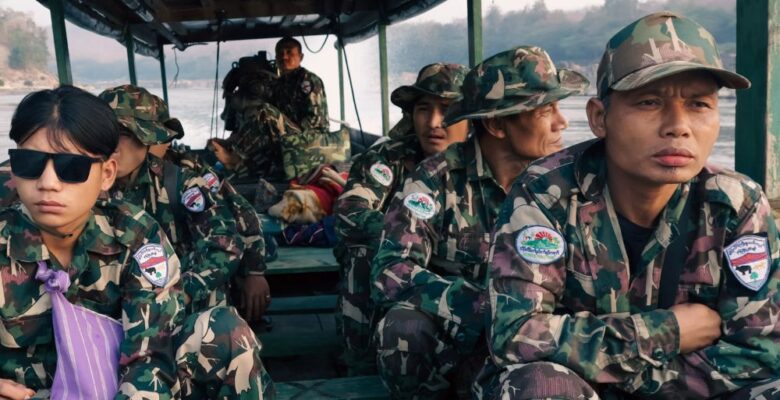
For more than a decade, authorities, community forest rangers, and local residents along the Salween River have quietly worked to monitor illegal logging, timber trafficking, and other activities threatening one of Southeast Asia’s last major free-flowing river systems.
In late August 2026, those efforts resulted in the interception of illegally logged timber in two separate operations along the Thailand-Salween Peace Park border . Captain Saw Bu Gay, head of the KNU Mutraw District Border Trade and Security Office and a participant in both operations, confirmed that 76 logs were intercepted from two rafts on 23 August in KNU-administered territory in Mutraw District—31 on one raft and 45 on the other. Thai authorities secured a further 59 logs on the Thai side of the Salween River on 26 August.
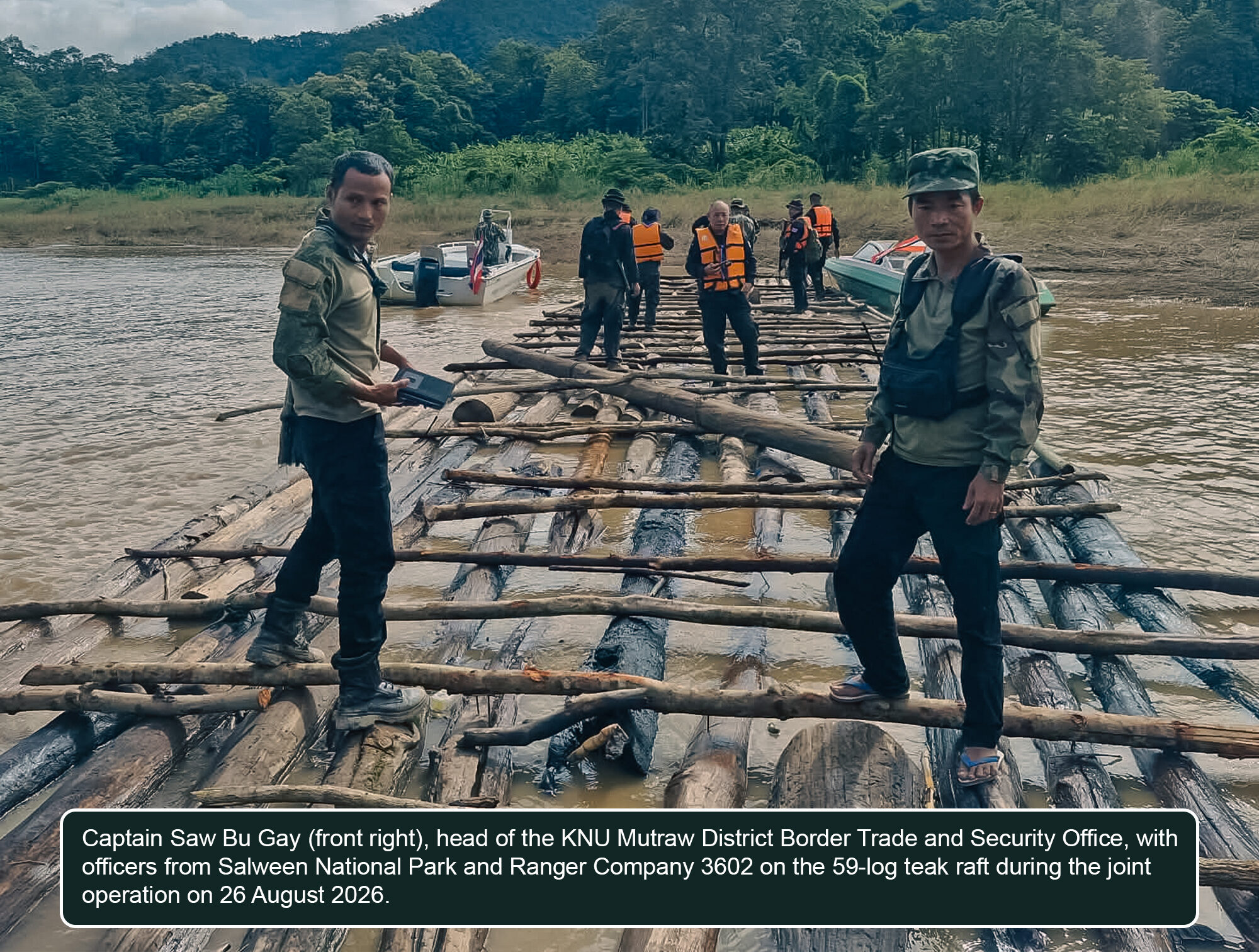
On 25 August, Captain Saw Bu Gay, head of the KNU Mutraw District Border Trade and Security Office, received information from a local boat operator who had observed suspicious activity suggesting preparations to transport timber by raft. Saw Bu Gay and his team searched upstream but could not find the raft immediately. He then alerted Thai personnel stationed along the river and asked them to monitor the situation. Later that night, Thai personnel reported finding the raft lodged along the Thai riverbank. The two sides agreed to address it together the following morning.
On 26 August, Saw Bu Gay and his crew joined Thai personnel at the site. Thai officers secured the timber, but another practical problem arose: their speedboats could not tow the heavy log raft to a secure location.
“Thai officers secured the raft, but their speedboats could not tow the log raft,” said Padoh Saw Klo Htoo, Secretary of KNU Mutraw District. “Our team then provided a larger motorboat to tow the raft to a secure location on the Thai side. This is a good example of how authorities on both sides of the Salween River support one another in addressing issues along the border.”
This operational detail may sound small, but it reveals a great deal about how enforcement works in a remote river landscape. It shows different institutions exercising responsibility in their respective areas while exchanging information and providing practical assistance when an environmental crime crosses the river. That is what practical border governance can look like on the ground.
Another part of the story that rarely makes the headlines is the work of the community forest rangers of the Salween Peace Park. Long before the media photographed an illegal timber raft, community forest rangers were already patrolling the forests and river corridors of the Salween Peace Park. They are a groups of villagers recruited and train by the Kawthoolei Forestry Department in Mutraw District. They are among the first eyes and ears of the forest-protection system. They notice changes and often receive information long before formal authorities learn of an incident. For more than a decade, these rangers have monitored and reported illegal logging and wildlife hunting activities to the relevant KNU Mutraw District authorities. They have contributed significantly to the protection of forests and wildlife in the Salween River basin.
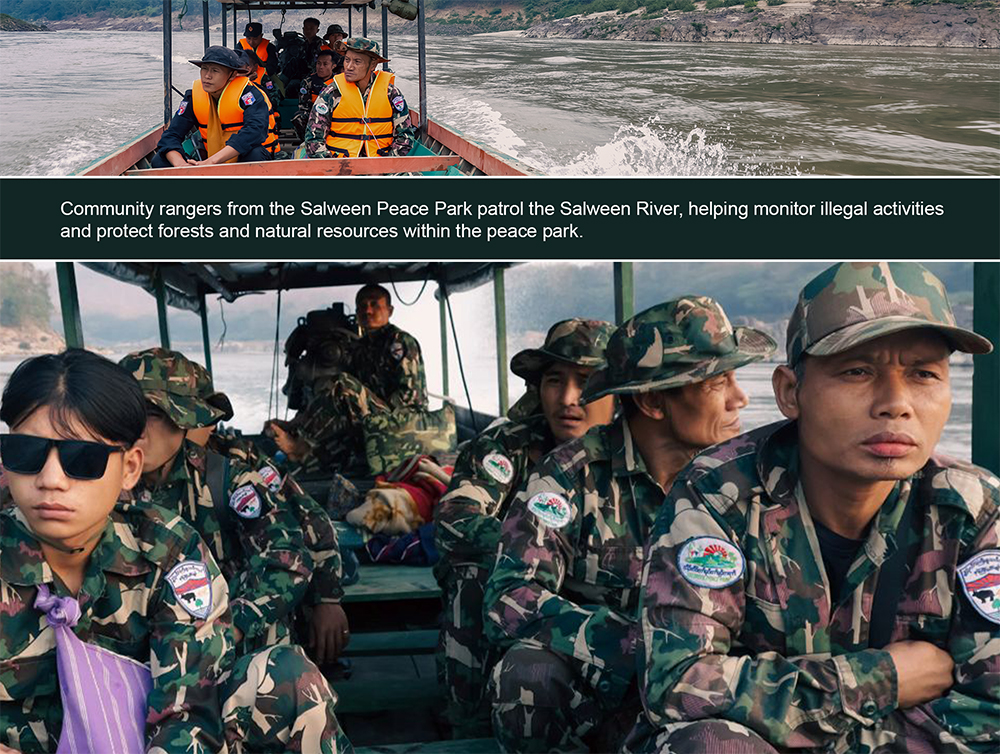
When the public sees a photograph of seized timber, the operation may appear to begin only when officers surround a pile of logs. In reality, successful forest protection begins much earlier. It begins with people living along the river who are willing to report suspicious activity. It begins with rangers patrolling remote forests when no one is watching. It depends on foresters who follow up on reports, boat operators who know the river, and authorities who can communicate across a difficult border landscape.
For decision-makers, the operational implications are concrete. Effective enforcement depends on whether frontline personnel have adequate communications, transport, monitoring tools, training, and safety arrangements, and whether clear channels allow information to move rapidly from communities to forestry personnel and relevant authorities.
Investment in checkpoints and patrol boats will have greater impact when matched by investment in community-based information and ranger networks that detect threats before illegal timber reaches those checkpoints.